Phone: +86 13570669003
  Email: sales@bocon-tec.com


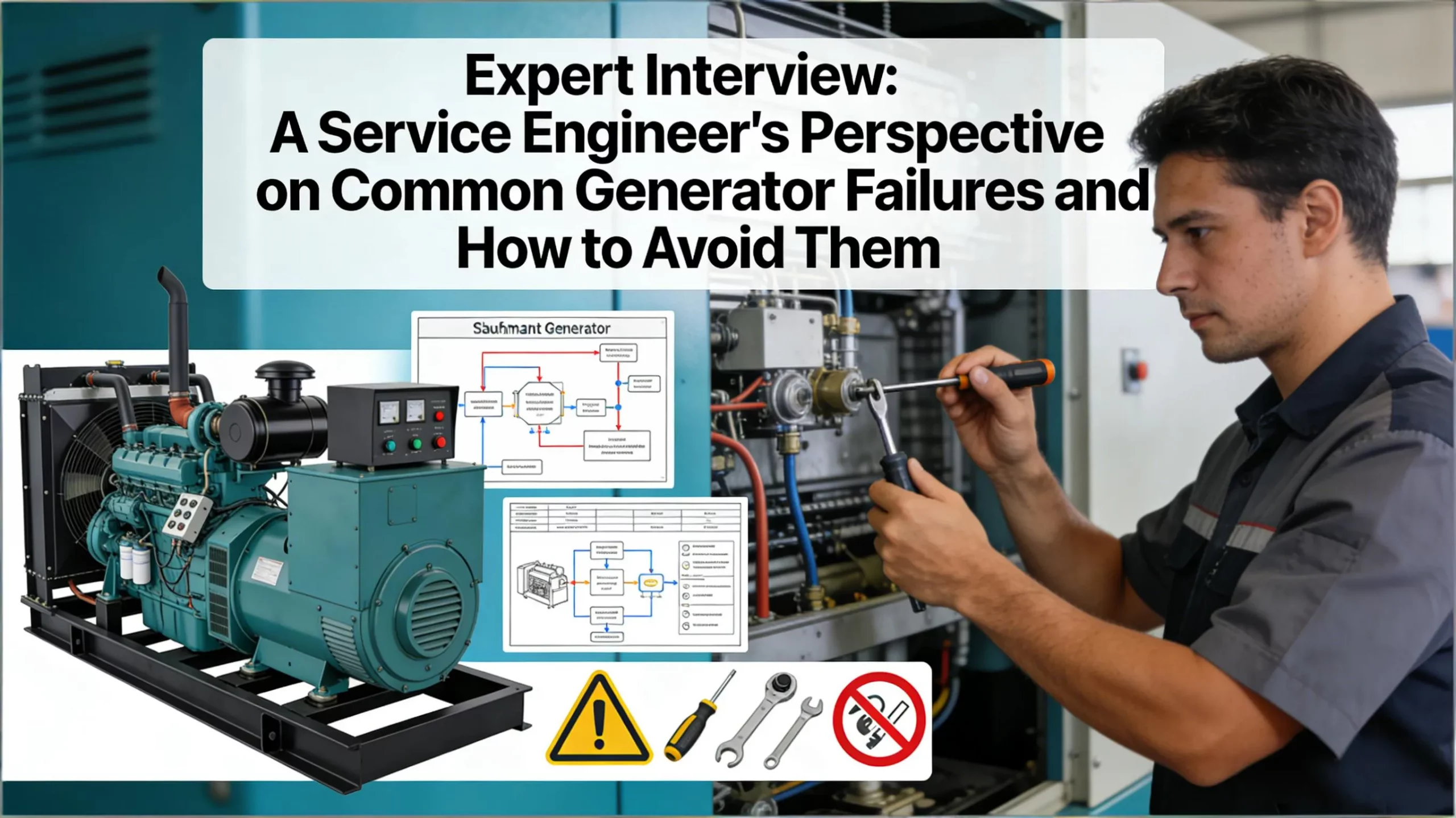
Expert Interview: A Service Engineer’s Perspective on Common Generator Failures and How to Avoid Them
Lessons from the Field: Wisdom from 15 Years of Troubleshooting
Who better to advise on keeping your generator set running than the person who fixes them when they break? We sat down with Mr. Anon (a pseudonym), a senior service engineer with over 15 years of experience across Southeast Asia, to get his candid perspective on Technology & Operation pitfalls and best practices.
Q: What are the top 3 most common failures you're called out to fix?
Anon: "It's surprisingly consistent:
- Failed Start due to Battery Issues: This is number one, maybe 40% of calls. Corroded terminals, old batteries that won't hold a charge, or failed automatic battery chargers. People forget the battery is the heart of the starting system."
- Fuel System Contamination: Water, sludge, or microbial growth (diesel bug) in the fuel tank. This clogs filters, damages injectors, and can completely shut down an engine. It's especially bad with generators that sit unused for long periods."
- Cooling System Failures: Overheating due to clogged radiator fins (dust, insects), loose fan belts, low coolant, or failed water pumps. In our hot climate, this is a fast track to an engine seizure."
Q: What's one simple practice most owners neglect that causes big problems?
Anon: "Running the generator without a sufficient load. I see this all the time with oversized units. Running at 10-20% load for long periods causes 'wet stacking'—unburned fuel and soot accumulate in the exhaust, degrading performance and causing premature wear. If your load is consistently low, you have the wrong-sized generator."
Q: What's your golden rule for preventive maintenance?
Anon: "Follow the manual, but adapt to your environment. The manufacturer's 500-hour service interval is a guide. If you're in a dusty construction site, check and clean the air filter every 100 hours. If you're by the coast, check for salt corrosion monthly. And for heaven's sake, keep a logbook! Record every hour of operation, every service, every liter of fuel added. It tells a story when something goes wrong."
Q: Any final advice for someone buying their first industrial generator?
Anon: "Think of service before you buy. Ask: Who will service it? How far is their workshop? Do they stock parts for this model? A slightly cheaper generator from a brand with no local support will cost you ten times more in downtime later. And insist on a proper load bank test after installation. It's the only way to prove the generator can actually do what the spec sheet says under real conditions."
Key Takeaways: Prioritize battery care and fuel quality. Match the generator size to your actual load. Maintain adaptively. And choose a supplier with strong local service support. As Anon puts it, "A generator is a partner, not just a piece of equipment. Take care of it, and it will take care of you."