 Phone: +86 13570669003
  Email: sales@bocon-tec.com


The Role of Generator Dehumidifiers and Space Heaters in Preventing Standby Damage
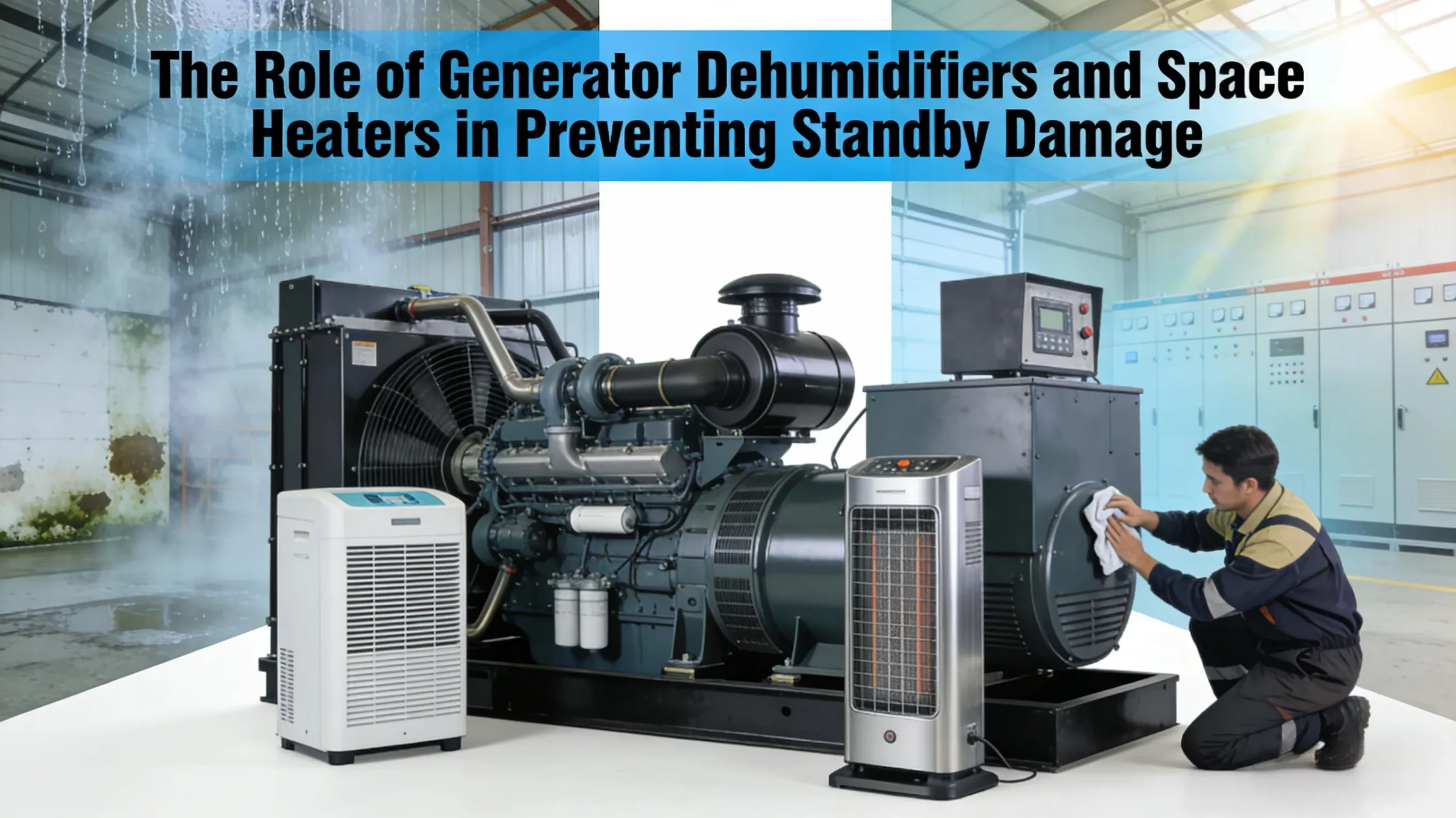
Protecting Your Investment When It's Not Running
A generator set faces its greatest enemy not during operation, but during long periods of standby. In Southeast Asia's high-humidity climate, temperature cycles cause moisture to condense inside the engine and alternator, leading to "standby damage." This Technology & Operation article explains how simple, often overlooked accessories—dehumidifiers and space heaters—can prevent catastrophic corrosion.
The Problem: Internal Condensation
When a cold generator sits in warm, humid air, moisture condenses on all internal metal surfaces:
- Engine Cylinder Walls & Crankshaft: Leads to rust, causing scoring on startup and accelerated wear.
- Alternator Windings: Compromises insulation resistance, leading to short circuits and eventual failure.
- Electrical Control Panels: Causes corrosion on terminals and circuit boards, leading to faulty operation.
- Fuel System: Promotes water accumulation in fuel, encouraging microbial growth ("diesel bug").
The Solution: Maintaining a Dry, Warm Interior
Two complementary devices work to eliminate condensation:
- Engine Block / Space Heater:
- A thermostatically controlled electric heating pad or immersion heater installed in the engine coolant jacket.
- Function: Keeps the entire engine block slightly warmer than the ambient air (typically 5-10°C above), preventing moisture from condensing on its surfaces.
- Alternator Dehumidifier (Air Dryer):
- A small, low-power device installed inside the alternator enclosure.
- Function: Continuously circulates and dries the air inside the alternator, maintaining very low relative humidity to protect the delicate copper windings and insulation.
Implementation and Cost-Benefit
These devices are relatively inexpensive (a few hundred dollars) and consume minimal power (often less than a light bulb). They should be:
- Specified as part of the initial purchase guide for any generator that will experience significant standby periods.
- Connected to a permanent power source (often the same circuit as the battery charger) to operate 24/7.
- Regularly checked during routine maintenance.
The cost-benefit is unequivocal. The minor ongoing electricity cost is trivial compared to the price of rebuilding a rusted engine or rewinding a flooded alternator. For silent canopies that trap moisture, these heaters are even more critical. Think of them as essential "life support" for your standby power asset.