 โทรศัพท์: +86 13570669003
  อีเมล: sales@bocon-tec.com


Navigating Import Regulations and Taxes for Generators in Thailand and Indonesia
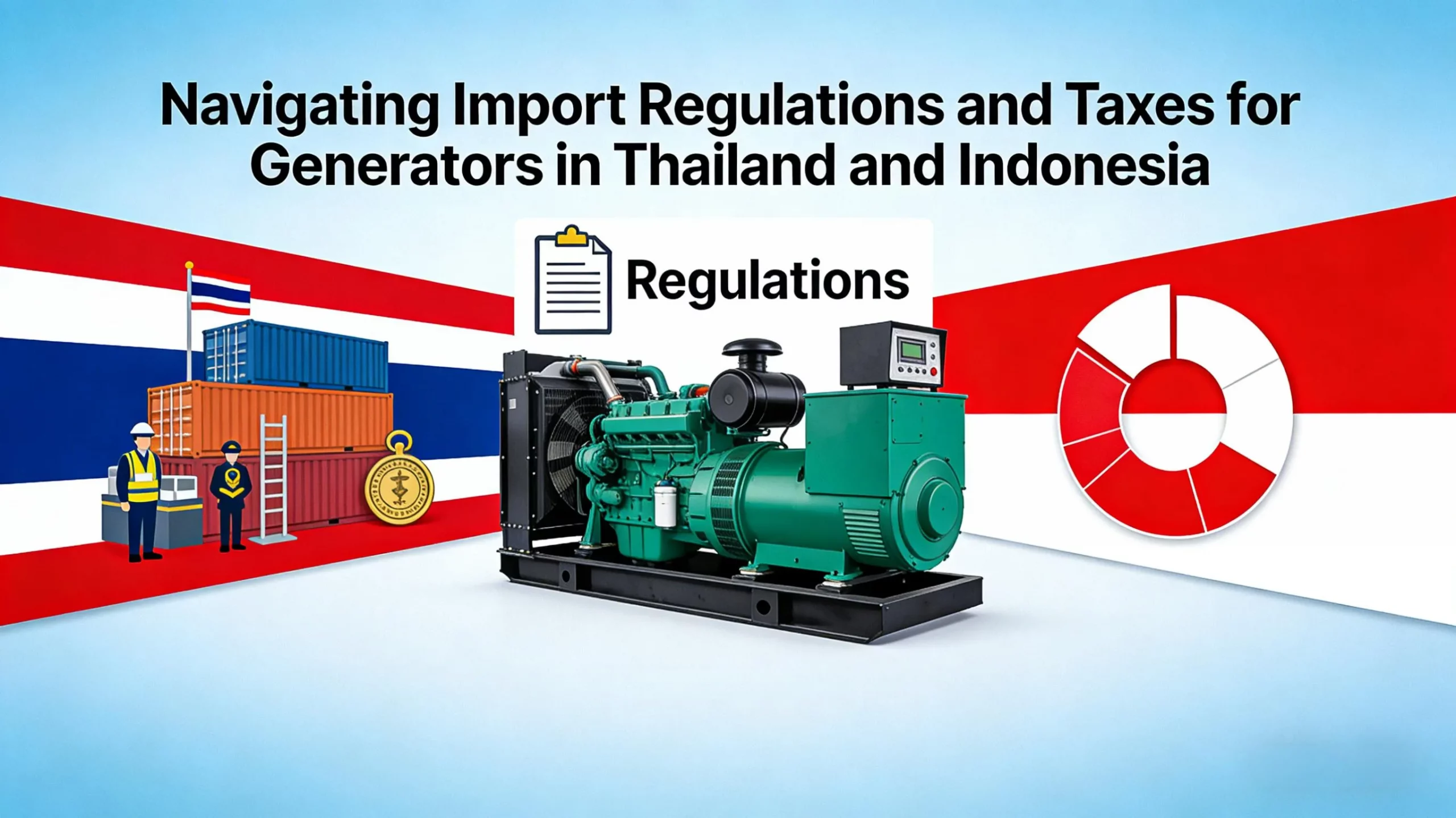
A Crucial Step in Your Procurement Journey
Purchasing a generator set from an international supplier involves navigating complex import regulations. Failure to comply can lead to costly delays, fines, or seizure of your equipment. This คู่มือการซื้อ provides a high-level overview of key considerations for importing generators into Thailand and Indonesia.
1. Thailand: Focus on Standards and Emissions
Thailand has specific requirements overseen by the Thai Industrial Standards Institute (TISI) and the Pollution Control Department (PCD).
- TISI Marking: Certain generator models may require TISI certification, which involves product testing and factory inspection. Verify if your chosen silent or open frame unit complies.
- Emission Standards: Generators must comply with PCD emission regulations (aligned with EU Tier levels). Ensure your supplier provides a valid Engine Emission Certificate.
- Import Duties & Taxes: Expect to pay Import Duty (typically 5-10%), VAT (7%), and potentially other fees. An experienced local customs broker is essential for accurate classification and valuation (HS Code typically 8502.xx).
2. Indonesia: Strict SNI Certification and Import Licenses
Indonesia's regulations are among the strictest in Southeast Asia, centered on the mandatory SNI (Standar Nasional Indonesia) mark.
- Mandatory SNI Certification: Almost all generators intended for sale or commercial use in Indonesia must possess SNI certification. This process is rigorous and must be initiated by the brand owner or an appointed importer. Buying from a supplier without SNI status will result in the generator being rejected at customs.
- API (Import Identification Number): The importing company must have a valid API (General Importer License).
- Import Duties and Luxury Goods Sales Tax (PPnBM): Import duties vary, and generators may be subject to PPnBM. Total tax incidence can be significant, making it crucial to factor this into the total landed cost.
Key Action Points for Importers
- Partner with a Reputable Local Agent: Work with a customs broker and/or a local legal entity with experience in importing heavy machinery.
- Demand Compliance Documentation: Before payment, secure all necessary certificates (TISI/SNI, Emission, Certificate of Origin, Commercial Invoice, Packing List) from your supplier.
- Budget for Total Landed Cost: Never base your decision on the FOB price alone. Calculate: Unit Cost + Shipping + Insurance + Import Duties + Taxes + Agency/Broker Fees.
Proactive compliance is the key to a successful import. Partnering with a supplier who understands these regional complexities, like Bocon, can streamline the entire process.